
Calhoun County Obituary Records
Calhoun County obituary and death records go back to 1867, held through the County Clerk in Marshall and vital records at the state level. If you are searching for a death notice, a funeral record, or a death certificate tied to Calhoun County, this page covers the main sources and how to get them. The county seat of Marshall and the city of Battle Creek both have strong local archives that can fill in gaps for older searches.
Calhoun County Overview
Calhoun County Clerk Office
The Calhoun County Clerk in Marshall is the local office for death records and burial permits filed in the county. The clerk keeps records going back to 1867. They can search by name or year, pull up a record, and make copies for you. For older records from the 1800s and early 1900s, availability can vary, but staff will do their best to locate what exists.
The clerk office is on Green Street in downtown Marshall. You can visit in person or call ahead to check on availability before making the trip. The office handles a range of vital record requests, so it helps to have a name, approximate year, and any other details you know. Certified copies cost around $13 to $15 for the first copy. If you need more than one copy of the same record, each extra copy is less. The Calhoun County government website at calhouncountymi.gov has contact info and some general guidance on records requests.
| Office | Calhoun County Clerk |
|---|---|
| Address |
315 W. Green St. Marshall, MI 49068 |
| Phone | 269-781-0706 |
| Hours | Monday through Friday, 8:00 AM to 5:00 PM |
| Website | calhouncountymi.gov |
Michigan State Death Records
For official certified death certificates, the Michigan Department of Health and Human Services Vital Records office in Lansing is the main state source. They hold death records from 1867 to the present for the whole state, including all of Calhoun County. A certified copy costs $34 for the first one, and $16 for each copy after that in the same order.
You can order by mail, in person, or through VitalChek, which is the state's approved online ordering partner. The state office phone number is 517-335-8666. Allow several weeks for mail orders. The Michigan Department of Health and Human Services vital records page has forms and instructions at michigan.gov. State law governing death record access and disclosure is found under MCL 333.2882, which sets out who can get a certified copy and what you need to show.
Note: Records less than 25 years old have tighter access rules. You must be an immediate family member or have a documented need.
Willard Library Genealogy Collection
Willard Library in Battle Creek stands out as one of Michigan's top genealogy libraries. This is not a small county branch with a few microfilm reels. The genealogy department at Willard Library holds a deep collection of local obituaries, death notices, cemetery records, funeral home records, and newspaper archives that cover Calhoun County going back well over a century. For many researchers, this library is the single best place to look for Calhoun County obituary records.
The newspaper collection is especially strong. The Battle Creek Enquirer has been publishing for well over 100 years, and Willard Library holds archived editions that include thousands of obituary notices. These notices often contain details you will not find in a death certificate: names of survivors, the church the person attended, where they worked, and sometimes even cause of death or migration history. If you are building a family tree or trying to fill in a gap in your records, the obituary column in an old newspaper is often the richest source you can find.
Beyond newspapers, the library holds local cemetery transcriptions, funeral home registers, and published county histories that list death dates and family connections. Staff in the genealogy department know the collection well and can point you toward the right materials. The library is open to the public and does not charge to use its genealogy resources in person.
Calhoun County has a notable history tied to the Underground Railroad. During the 1800s, significant activity moved through this area, and Sojourner Truth had connections here. This history means some records, including church records and community registers, may document individuals who arrived in the county through those routes. Willard Library and local historical societies hold some of these records, and they can be valuable for genealogists working on African American family history in this region.
The Michiganology death records page and the GEN-DIS database are also worth checking alongside a visit to Willard Library. GEN-DIS is a free online index of Michigan death records that can help you confirm a date before ordering a full copy.
Calhoun County Obituary Search Online
Several free online sources index Calhoun County death and obituary records. The Calhoun County MIGenWeb site at calhoun.migenweb.org is a volunteer-run genealogy project with transcribed records, cemetery listings, and links to local resources. It is one of the first places to check when you start a search.
The MIGenWeb project for Calhoun County has been adding records for years. You will find burial and cemetery data, some indexed obituaries, and links to other county-level resources. While it does not replace a full search at the clerk office or Willard Library, it can save you a trip if the record you need is already indexed there.
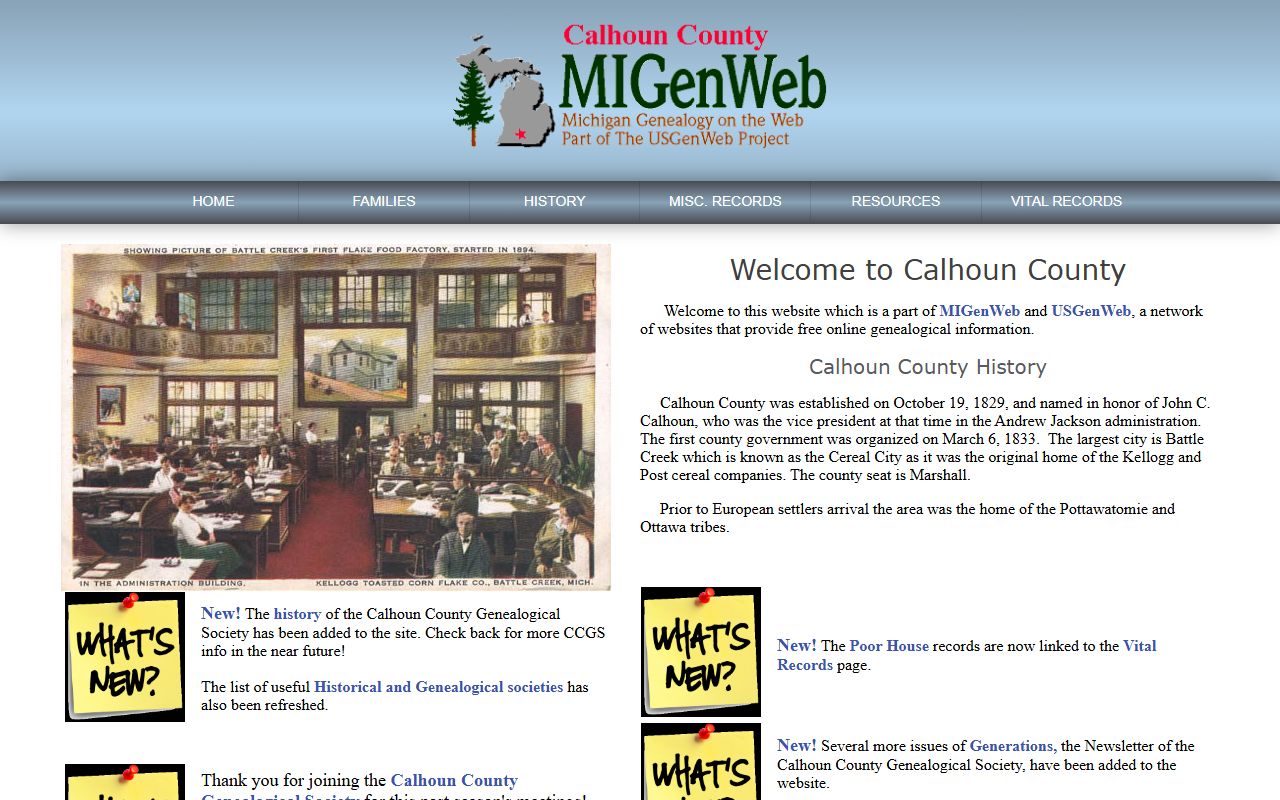
The MIGenWeb site covers a range of record types for Calhoun County, including some cemetery transcriptions that are harder to find anywhere else. Volunteers continue to add new data over time.
FamilySearch also indexes Calhoun County records. The FamilySearch wiki for Calhoun County lists available record sets, explains where original records are held, and links to digitized collections on the FamilySearch platform. This is a good starting point if you are new to researching in Michigan. The Michigan Library of Michigan in Lansing is another state resource with genealogy holdings; see michigan.gov/libraryofmichigan for what they offer remotely and in person.
Note: Online indexes are not always complete. A record that does not show up in a search may still exist at the clerk office or in the Willard Library newspaper archives.
What Calhoun County Death Records Show
A certified death certificate from Calhoun County will list the full name, date of death, place of death, cause of death, and where the person was buried or cremated. It also shows the decedent's birthdate, birthplace, and parents' names when those were recorded at the time. For family history work, the parents' names and birthplace are often the most useful fields, especially for tracing immigrants.
Older records from the late 1800s and early 1900s are sometimes less complete. Cause of death may use outdated medical terms, and birthplace data for parents was not always recorded. Still, these records are worth requesting. Even partial information can confirm a family line or rule out someone who is not the right person.
Obituary notices in newspapers like the Battle Creek Enquirer fill in what death certificates leave out. A typical obituary from the early 1900s in Calhoun County might include:
- Names of surviving spouse, children, and siblings
- Church affiliation and place of worship
- Where the person worked or what they did
- How long they had lived in the county
- Funeral home and burial location
These details are the kind you cannot get from a government form. They show who the person was in their community. That is why the Willard Library newspaper archives are so valuable for Calhoun County obituary research. The funeral home records held at the library sometimes go even further, with handwritten ledger entries that note pallbearers, who paid for the service, and personal notes from the funeral director.
Local Archives and Genealogy Resources
Calhoun County has a rich documentary history. The W.K. Kellogg Foundation and the cereal industry that made Battle Creek famous also left behind strong institutional records. Local churches, civic organizations, and industries kept registers over the years, and some of those records wound up at Willard Library or the Calhoun County Historical Society. If you are looking for someone connected to the early cereal industry or the civic life of Battle Creek in the early 1900s, those institutional records can be a good secondary source.
The Marshall Historic District includes some of the oldest properties in the county. Marshall has its own local historical records at the Marshall Public Library and through the Calhoun County Historical Society. These groups can sometimes point you toward local church burial registers or family histories that are not held anywhere else.
The Underground Railroad history in this region also created unique records. Some formerly enslaved people who settled in Calhoun County in the mid-1800s are documented in church registers and community records that survive in local archives. Researchers working on African American genealogy in Michigan should check with Willard Library's genealogy staff about what Calhoun County-specific materials they hold for that period. The state's GEN-DIS database at michiganology.org is a free tool that can help locate death record entries as a starting point for this kind of research.
Nearby Counties
These counties border Calhoun County. If you are not sure which county holds the record you need, check where the person lived at the time of death. Each county clerk holds records for deaths that occurred within that county.