
Clinton County Obituary Records
Clinton County obituary records go back to 1867 and are spread across the County Clerk's office in St. Johns, local newspapers, and genealogy databases. If you need to find a death record or trace family history in Clinton County, this page covers the main sources you can use. The county seat is St. Johns, and most official records are kept there. State death records and older obituary collections are also available through Michigan state agencies and online archives.
Clinton County Overview
Clinton County Clerk Office
The Clinton County Clerk in St. Johns is the main office for official death records and related court documents. The clerk's office holds vital records filed with the county, and staff can help you find records by name or date. For death certificates issued by the state, you will need to go through the Michigan Department of Health and Human Services, but the clerk is a good starting point for local probate and court-related death records.
The clerk's office is open Monday through Friday. Staff can look up records and tell you what's available locally. If you need older records, they may direct you to the Clinton County Historical Society or the MIGenWeb project, which has digitized a number of early county records. For any in-person visit, bring a photo ID and know the full name and approximate date of death you are searching for. That makes the search faster and more likely to turn up the right person.
| Office | Clinton County Clerk |
|---|---|
| Address |
100 E. State St. St. Johns, MI 48879 |
| Phone | 989-224-5140 |
| Hours | Monday through Friday, 8:00 AM to 4:30 PM |
| Website | clinton-county.org |
Michigan State Death Records
Michigan death certificates are held by the Vital Records office under the Michigan Department of Health and Human Services. You can request a certified copy by mail, in person at the Lansing office, or through VitalChek. The state fee is $34 for the first certified copy and $16 for each extra copy ordered at the same time. The phone number for the state vital records office is 517-335-8666.
Michigan death records at the state level go back to 1867. The state has statewide registration, so most deaths in Clinton County after that year should have a record. Deaths before 1867 were sometimes recorded at the township level or in church registers. If you need a record from before state registration started, local genealogy sources are often your best option. The MichiganOlogy death records page has a good overview of where to look depending on the time period.
Under MCL 333.2882, certified death certificates are restricted to immediate family members, legal representatives, and others with a documented need. Informational copies with fewer details may be available to the general public depending on the age of the record.
Note: Death records less than 25 years old are generally restricted to authorized requesters under Michigan state law.
Clinton County Obituary and Genealogy Sources
The Clinton County MIGenWeb site is one of the most useful free resources for obituary research in this county. Volunteers have compiled death notices, cemetery records, and historical newspaper clippings from Clinton County going back well over a century. The site covers sources like the St. Johns Echo and the Clinton County News, both of which published local obituaries for decades. These newspaper obituaries often include more family detail than an official death certificate does.
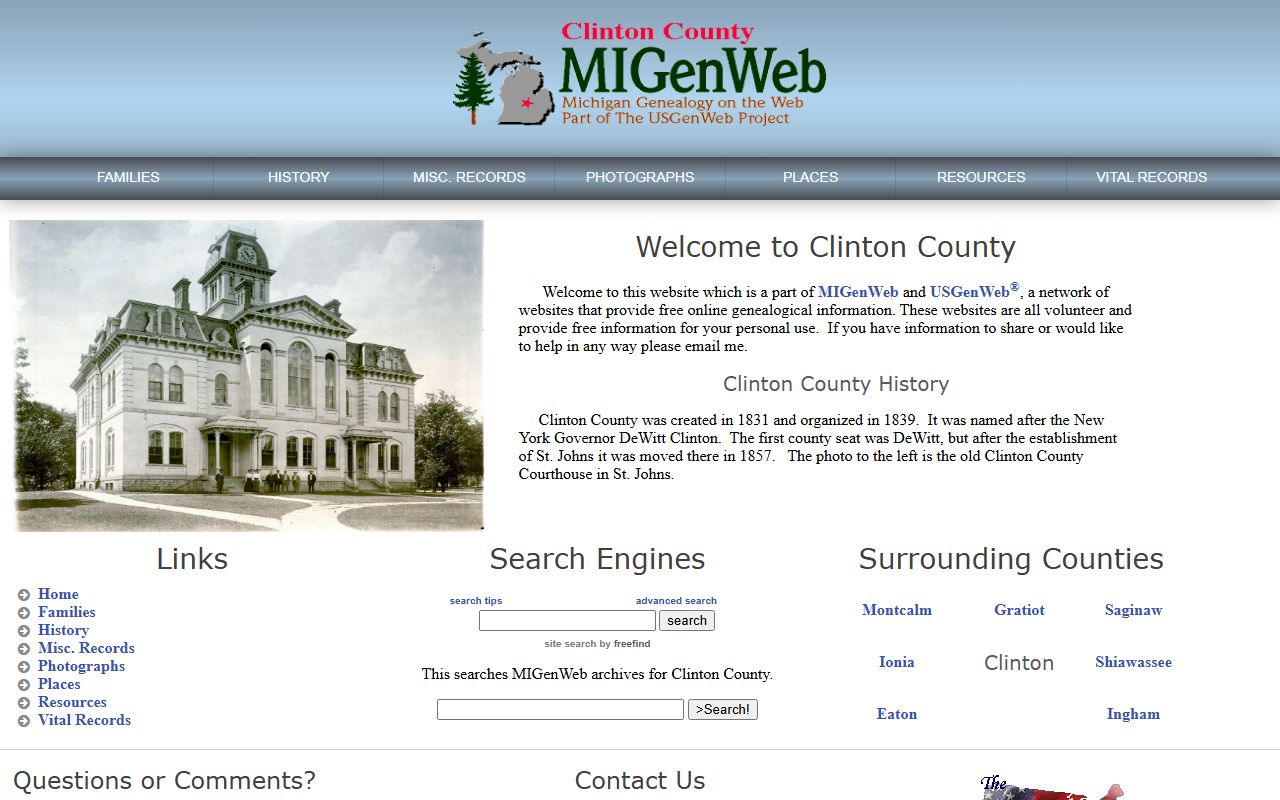
The MIGenWeb project for Clinton County is part of a larger volunteer effort to make Michigan genealogy records freely available online. If you are looking for a death record or obituary from the late 1800s or early 1900s, this is a strong place to start before paying for copies from the state or county. Many of the older newspaper obituaries give full names, ages, causes of death, and surviving family members, which makes them very useful for tracing a family line.
FamilySearch's Clinton County Michigan Genealogy guide is another free starting point. It lists the main record collections available for Clinton County, including birth, death, and marriage records, along with links to indexes and digitized originals where they exist. FamilySearch has a large collection of Michigan death records and can be searched at no cost.
Local Libraries and Historical Resources
The Capital Area District Libraries (CADL) serves Clinton County residents and has a branch in St. Johns. The CADL website provides access to genealogy databases, newspaper archives, and research tools. Many of these are available for free with a library card. Local history collections at the St. Johns branch may include obituary clippings, local newspaper back issues, and county history volumes that contain death and burial information.
The Clinton County Historical Society and the Clinton County Genealogical Society are both active local organizations. These groups have worked to preserve old records and make them accessible to researchers. The Historical Society maintains collections related to county residents, and members sometimes have access to materials not available elsewhere. If you are researching a family that lived in Clinton County for several generations, contacting these groups directly can be worth the effort.
Clinton County has a strong agricultural heritage as a major mint farming region in Michigan. Many of the families tied to that industry have deep roots in the county, and their histories are well documented in local newspapers and church records. The St. Johns Echo and the Clinton County News both covered local deaths and published obituaries for many decades. Copies of these papers are held at local libraries and may be digitized through state archives.
Note: The Clinton County Historical Society may hold records not available through online databases, so a direct inquiry can help when other sources come up empty.
Online Databases for Clinton County Death Records
Michigan has several statewide online tools that cover Clinton County obituary and death record searches. The MichiganOlogy GENDIS database is a free index of Michigan death records that can be searched by name. It pulls from state death certificate data and gives you enough information to know whether a full record exists and where to get it. This is a good first step before ordering a certified copy from the state.
The Library of Michigan in Lansing holds historical newspaper collections and genealogy resources that cover Clinton County. Because St. Johns is close to Lansing, researchers in this area have convenient access to the Library of Michigan's reading room and its Michigan newspaper microfilm collection. The library has obituary indexes for many Michigan papers, including some from Clinton County. You do not need to be a state resident to use the library's in-person collections.
The Michigan Archives is also in Lansing and holds historical state records. Older vital records, including some death registers and church records, are stored there. Clinton County researchers benefit from the county's proximity to these state resources. A single trip to Lansing can cover both the Library of Michigan and the Archives of Michigan, making it efficient for anyone doing deep family history research in this part of the state.
Between the state-level databases and the Clinton County-specific genealogy sites, most researchers can find what they need without leaving home. When you do hit a dead end online, the local offices in St. Johns and the resources in Lansing fill the gap.
Cities in Clinton County
Clinton County's largest city is St. Johns, the county seat. No cities in Clinton County meet the population threshold for individual city pages on this site. Lansing, the state capital, is located in neighboring Ingham County and is a major resource center for Clinton County residents seeking state records.
Nearby Counties
These counties border Clinton County. If you are not sure which county has the records you need, check where the person lived at the time of death. Death and burial records are usually filed in the county where the person resided or died.